.png)
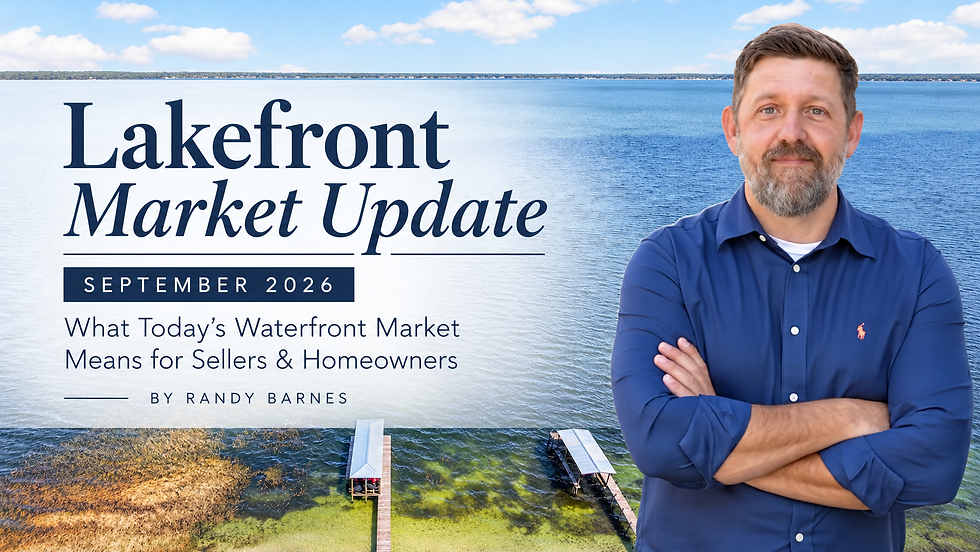
Why Waterfront Real Estate in Central Florida Keeps Outperforming the Market


Central Florida's rivers, springs, and lake chains have always drawn buyers looking for something the inland subdivisions can't offer: a backyard that leads straight to the water. From the spring-fed clarity of the Nature Coast to the Butler Chain of Lakes near Orlando, waterfront property here isn't just scenery — it's one of the most resilient categories in the entire regional market.
What Makes This Market Different
Unlike inland neighborhoods where value is driven mostly by square footage and school zones, waterfront pricing is shaped by access. Direct river or lake frontage, deep-water docks, and unobstructed views command a real, measurable premium over comparable homes just a few streets back from the shoreline. Buyers aren't only purchasing a house — they're purchasing a lifestyle: boating to dinner, kayaking before work, watching manatees or ospreys from the porch.
That lifestyle premium is why waterfront listings tend to hold value better during slower markets, even as overall days-on-market numbers rise for the broader area.
Where Buyers Are Looking Right Now
A few pockets of Central Florida continue to see the strongest waterfront demand:
Crystal River and the Nature Coast — spring-fed, boat-friendly, and known for manatee encounters right off the dock
The Butler Chain of Lakes — some of the clearest lake water in the state, close to Orlando's job centers
The St. Johns River corridor — wide, navigable water attracting larger boats and multi-generational buyers
Central Florida's spring-run canals — smaller, often more affordable entry points into true waterfront living
Each of these areas has its own buyer profile, but they share one thing in common: inventory is limited, and it isn't getting less limited over time.
Pricing Waterfront Property Correctly
Because comparable sales are thinner for waterfront homes than for standard subdivisions, pricing takes more care. Two homes on the same street can carry very different values depending on:
Water depth and navigability at the dock
Frontage footage and lot orientation to the sun
Flood zone designation and elevation certificates
Whether the seawall, dock, or lift has been recently permitted and maintained
An agent who pulls comps only from inland sales — or who doesn't weight these waterfront-specific factors — will misprice the home in either direction. Overpricing leads to extended time on market; underpricing leaves money on the table.
Marketing Waterfront Homes the Right Way
The single biggest mistake in this segment is marketing a waterfront home like any other listing. Standard photography and a floor plan simply don't communicate what buyers are actually paying for. Homes that sell fastest and closest to list price tend to use:
Lifestyle-driven photography and video that shows the home being lived in, not just staged
Drone footage capturing the full lot, water frontage, and surrounding shoreline
On-the-water videography, shot from a boat, showing the approach to the dock and the view back toward the house — this is often the single most persuasive piece of content for out-of-area and relocation buyers who are picturing themselves living there before they ever tour in person
For sellers, this is worth internalizing: the marketing budget on a waterfront listing isn't really optional. It's part of accurately representing the value of what's being sold.
The Bottom Line
Waterfront real estate in Central Florida remains one of the more durable corners of the market — but it rewards sellers and agents who treat it differently from a standard listing. Correct, water-aware pricing paired with marketing that actually shows the lifestyle is what separates a home that sits from one that moves.
Thinking about buying or selling on the water in Central Florida? A second opinion on pricing or marketing strategy costs nothing and often reveals what's been missing.


Comments